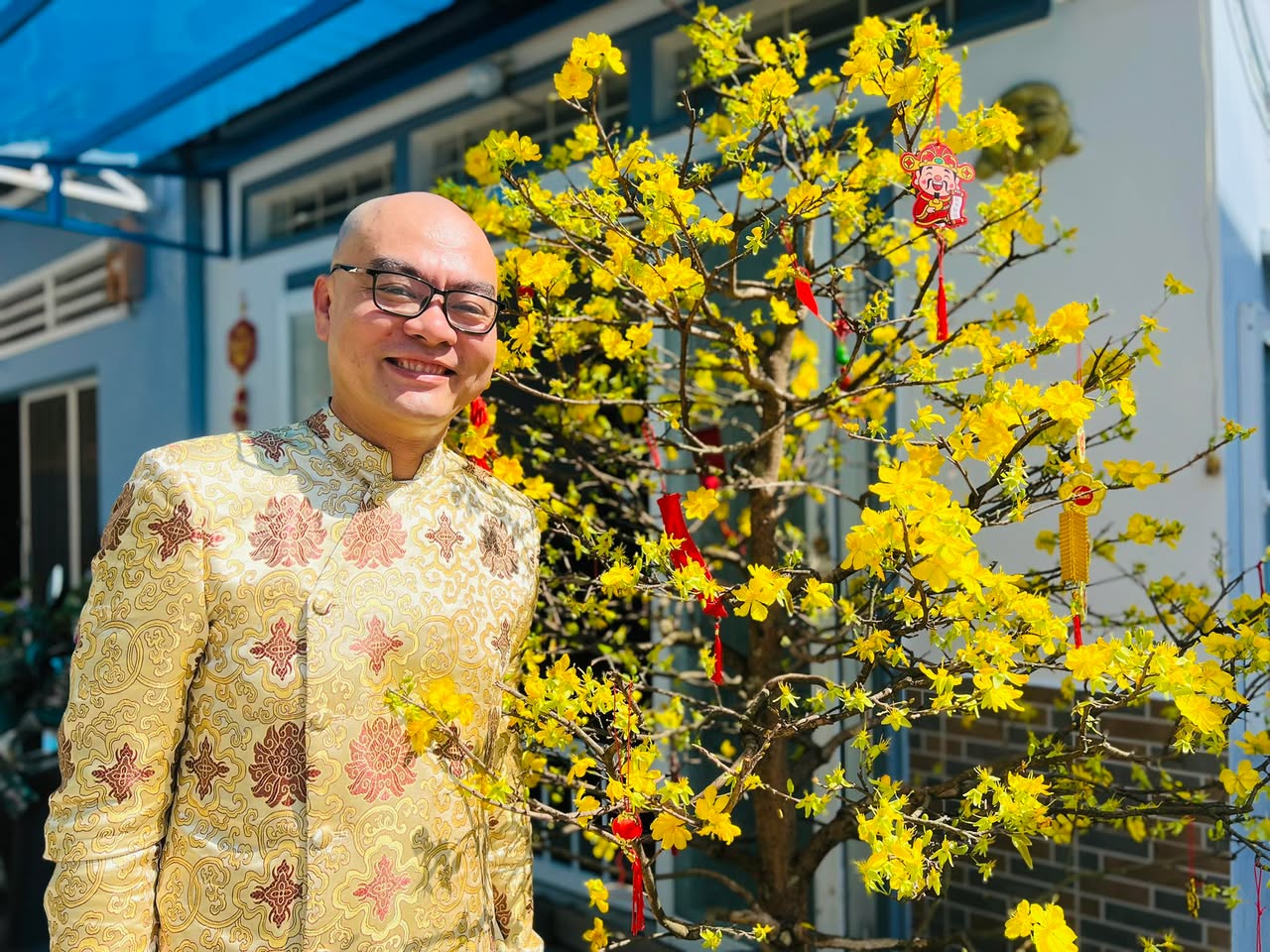
The coffee shop at the mouth of the alley welcomes a few old boys and uncles every morning — the first customers, sitting around chewing the fat about loving your country, loving your people, and how the world might finally find peace. During the three days of Tết, sitting at a lower table, I caught today's conversation: the uncles were talking about tiến lên, xập xám. The mouth of the alley has a temporary detention station, all cops and neighborhood militia, so you can't actually set up a card game — you have to play by theory instead. Whoever's theory is stronger, that's the man left standing.
If you call bài cào elementary school, where you learn the faces of the cards, then cát-tê (Catte) must be middle school, which makes tiến lên high school. Anyone who can play xập xám has made it into university.
I really loved elementary school — I was best in class. Middle school I won sometimes, lost most of the time. High school I loved, because this game is beautiful when you have a full table: every suit has four of each card, so everyone gets an equal shot at holding power in their hand — even though in a lifetime of playing you'll only get dealt one perfect one-of-each hand a few times. The asymmetry is what makes it great. Fifty-two cards also make it fun to guess what thirteen cards each player is sitting on. And then there's the art of arranging your thirteen cards into hands of battle — sometimes just to avoid getting wiped out, or to win as many pots as possible, or to win the most even if you lose on a third hand. If tiến lên is that good, then binh xập xám is the pinnacle of the art of commanding thirteen cards. I'd say these two beat poker at tactics, hands down.
The way these uncles sit and play by theory is, very clearly, theorycrafting. When the conditions won't let you practice, you fight with theory instead — it's its own kind of inner cultivation.
I love learning theory from those coffee tables. Because whenever I actually played anything past middle school I'd always lose — I wasn't fast enough to work out the state of the game, especially after the twenty-fourth hand or so. My memory is strong when it's tied to a story, a thing, or a feeling. My analysis is deep, so I need a big hand, stretched out over many years. The rest I just have to hand over to fate — and luck spread evenly is the fairest thing of all, so losing doesn't mean I was bad and winning means my stars were red.
That said, this year I haven't had my traditional start-of-spring brain workout on those killing games — I've been spending all my time with the old boys, theorycrafting AI for the biggest bet of my life over the next few years.

No comments yet
Owl post is moderated and may take a moment to arrive.