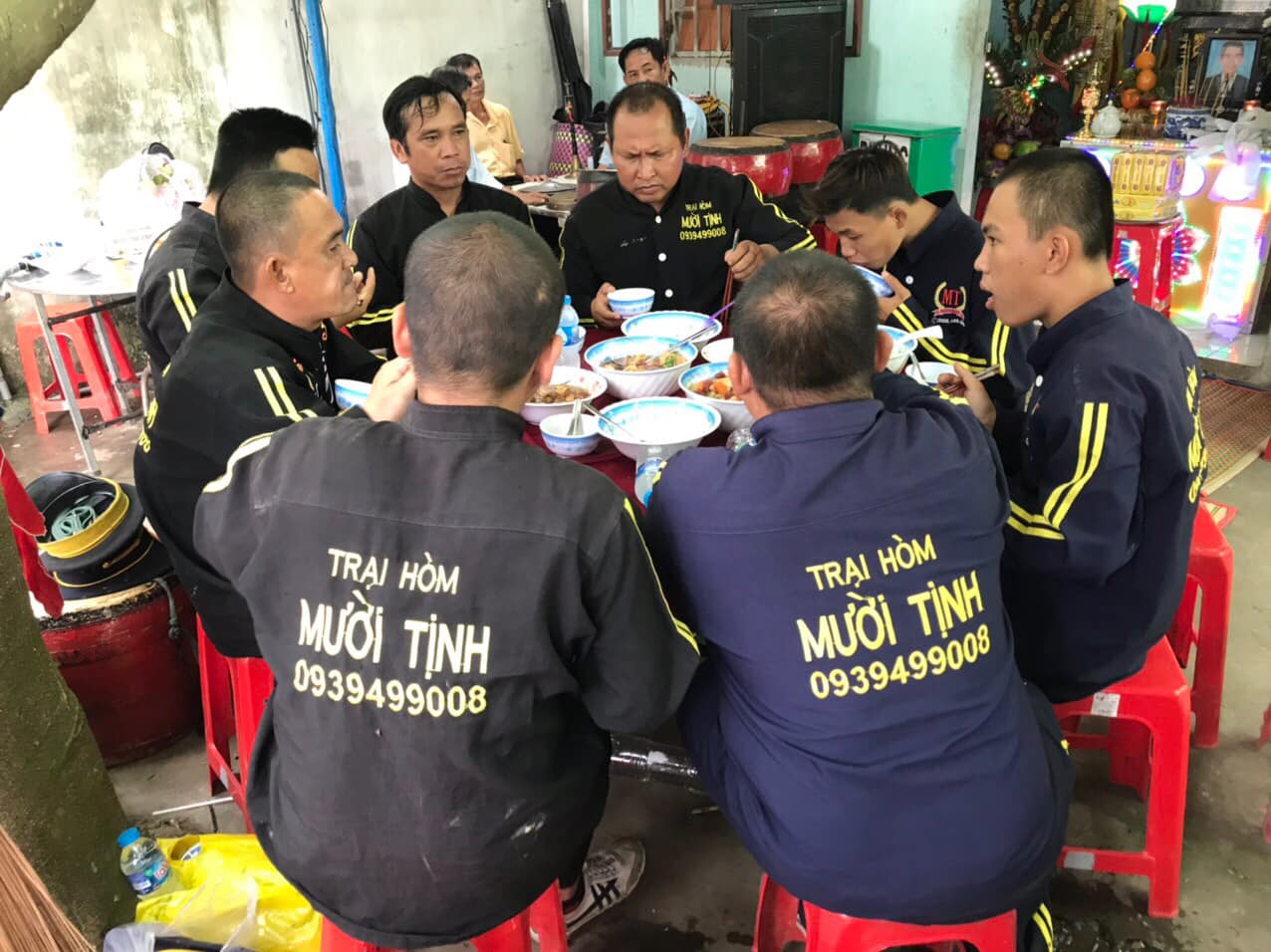
Chuyện đám tang miền Tây Nam Bộ.

Ông anh dân quận 4 người Sài Gòn hỏi: “ở đây đạo tì (người khiêng hòm) làm việc đúng giờ cơm thì chủ nhà mới đãi cơm ăn hả? Chứ trên Sài Gòn xưa giờ không có vậy”
Trả lời: “Dạ hông phải anh, đạo tì mà làm 3h sáng 30 Tết thì cũng được đãi ăn, 2h30 giờ chiều ngày 22 tháng 5 dương lịch cũng ăn, 11h30 khuya ngày 28 tháng 2 âm lịch cũng ăn, 8h sáng ngày 11 tháng tư âm lịch cũng ăn, 7h tối ngày âm lịch nào cũng đãi ăn. Tự người miền Tây từ xưa đâu có tiền bạc gì, đám ma toàn hàng xóm anh em trong nhà giúp đỡ nhau. Thanh niên tới tuổi lớn thì thay thế anh em đi trước mà học theo, tập cách múa phá hoàng, khiêng hòm. Không có tiền chứ còn đồ ăn thì nhiều! Nên coi như có qua có lại, đãi nhau một hai bữa ăn. Không có điều kiện thì một bữa trước khi đưa linh cữu đi. Có điều kiện thì chôn xong lại quay về ăn, thêm chút rượu đế gọi là chia buồn với gia chủ. Vậy đó anh, mấy mươi năm người miền Tây vẫn vậy.”

On funerals in the Mekong Delta

Mekong folks never had much money; funerals were neighbors and family helping each other.

Conjured Translation Translated from Vietnamese by Claude. Original thoughts are entirely the author's.
Đọc Bản Gốc →

On funerals in the Mekong Delta.

An older brother from District 4, Saigon, asked: "Out here, do the đạo tì — the pallbearers — only get fed if they happen to work at mealtime? Up in Saigon it's never been that way."
I answered: "No, anh, it's not like that. If the pallbearers are working at 3 in the morning on the 30th of Tết, they get fed. 2:30 in the afternoon on 22 May, they get fed. 11:30 at night on the 28th of the second lunar month, they get fed. 8 in the morning on the 11th of the fourth lunar month, they get fed. 7 at night on any lunar-calendar day, they get fed. Mekong folks never had much money of their own — funerals were all about neighbors and family in the house helping each other. When the young men come of age, they take over from their elders and learn the steps — how to dance the phá hoàng, how to carry the coffin. No money, but plenty of food! So you call it reciprocity — you treat each other to a meal or two. If you can't afford more, one meal before the casket is carried out. If you can, you come back after the burial to eat again, with a little rice liquor as a way of sharing the family's grief. That's how it is, anh. For decades Mekong people have done it this way."
Illuminate this memory

Owl Post

Receive new memories by owl. No spam, no dark magic.

No comments yet

Owl post is moderated and may take a moment to arrive.

Phù phép bởi CC